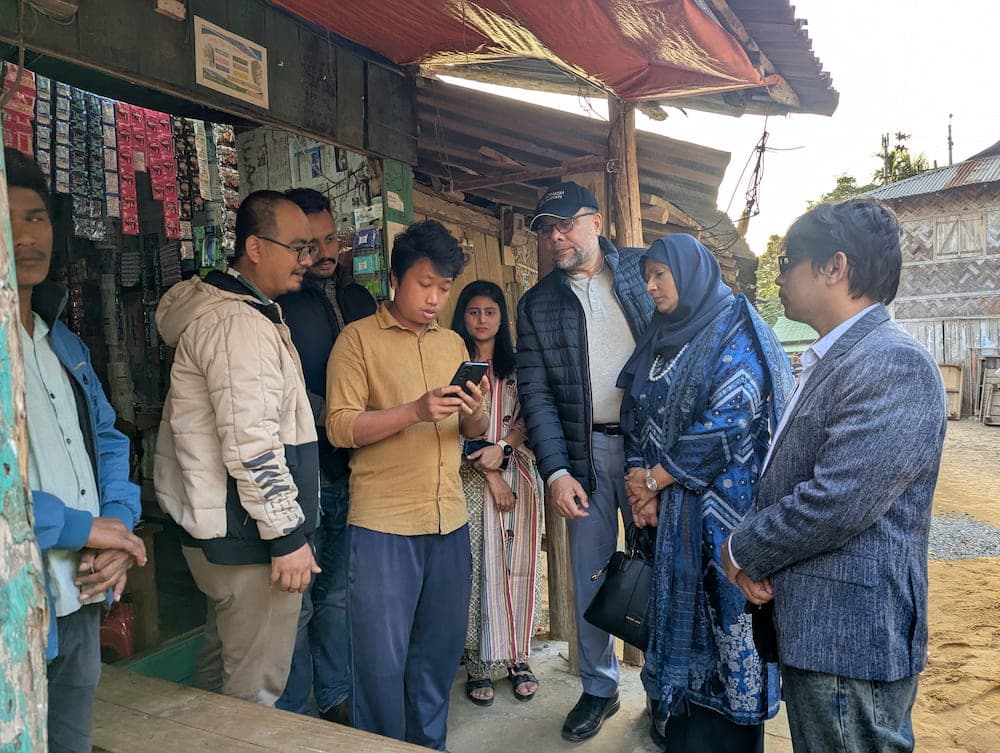
For millions of people, a smartphone is the primary gateway to the internet. Messages, social media posts, notes, and documents are all created through a simple but powerful tool—the keyboard. Yet for many indigenous communities in Bangladesh, typing in their own language has long been difficult or even impossible due to the lack of appropriate digital tools.
A new initiative from the Enhancement of Bengali Language in ICT Through Research and Development (EBLICT) project is beginning to change that reality. Their Android application, Uboard — A Universal Keyboard, is helping speakers of several indigenous languages write digitally in their mother tongue for the first time.
When Technology Leaves Languages Behind
Bangladesh is home to a rich linguistic landscape. Alongside Bengali, dozens of indigenous languages are spoken across the country, including Santali, Marma, Mru, and Chakma. While many of these languages have established scripts and even Unicode support, the everyday tools required to type them—such as accessible mobile keyboards—have remained limited.
As a result, many speakers have been forced to communicate online using Bengali or English instead of their native language. Over time, this lack of digital representation can contribute to language erosion, particularly among younger generations who spend much of their communication online.
The challenge is not simply linguistic—it is technological. Without practical tools that support diverse scripts and keyboard layouts, languages struggle to exist in the digital space.
A Keyboard Designed for Linguistic Diversity
Uboard was developed to address exactly this problem. Rather than building a keyboard for only one or two languages, the developers designed a universal keyboard platform capable of supporting many languages and scripts within a single application.
With Uboard installed on an Android device, users can type in Bengali as well as several indigenous languages such as Santali, Marma, Mru, and Chakma. The keyboard also supports multiple widely used typing layouts, allowing users to work with familiar systems while writing in their own language.
For communities that previously lacked accessible digital typing tools, this simple change has meaningful implications. A language that could not easily be typed on a smartphone can now appear in text messages, social media posts, community announcements, and educational materials.
Empowering Communities to Shape Their Own Tools
One of the most significant aspects of Uboard is its flexibility. The keyboard allows users to create and customize their own keyboard layouts, making it possible to support languages that have limited technological resources.
This capability opens the door for linguists, educators, and community members to design layouts tailored to their writing systems. In effect, the platform provides the technical foundation while allowing communities themselves to shape how their language appears in digital form.
Such flexibility is particularly important for low-resource languages, where commercial technology platforms rarely invest development effort.
Digital Presence as Cultural Preservation
The ability to write digitally in one's native language is more than a matter of convenience. It plays a crucial role in language preservation and cultural continuity.
When languages exist in messaging apps, online discussions, and digital documents, they remain relevant to younger generations. Communities can share stories, document traditions, and create educational resources in their own language without switching to a dominant one.
Tools like Uboard therefore help ensure that indigenous languages are not excluded from the rapidly expanding digital environment.
A Step Forward for Inclusive Language Technology
The development of Uboard reflects a broader effort to make digital technology more inclusive of Bangladesh’s linguistic diversity. By supporting both widely used and lesser-known languages within one platform, the application demonstrates how thoughtful design can expand access to digital communication.
Through the work of the EBLICT project, languages that once had limited representation in technology are beginning to find a place on everyday devices.
For many users, Uboard is more than just another keyboard—it is a tool that allows them to write, communicate, and share their culture in the language that represents who they are.